Should Team Members Challenge Leadership If They Think They Are Wrong?

Disagreement inevitably surfaces when more than a few people gather on a team. Different backgrounds, experiences, and viewpoints naturally collide. What happens when team members disagree with a decision made by their leader? Should they speak up and challenge the direction, or simply stay quiet and follow along?
Navigating conflict is a core component of team building. When handled correctly, pushing back against a leader’s opinion can transform a good team into a great one. We will explore how open disagreement shapes effective leadership, improves workplace collaboration, and leads to better outcomes for everyone involved.

Team Decision Making

The Anatomy of Team Decision-Making

Group choices are inherently more complex than individual ones. When a single person makes a choice, they only consult their own expertise. When a group tackles a problem, multiple perspectives enter the mix.
For team decision-making to thrive, the leader must create an environment that welcomes diverse thoughts. The most effective managers guide their teams through complex choices by adopting a few key behaviors:
  • Asking for genuine input from all team members
  • Listening closely to alternative suggestions without immediate judgment
  • Considering all viable options, rather than stubbornly clinging to their original idea
  • Communicating transparently about why one path is ultimately more favorable than the others
If a leader ignores these steps, challenging a decision becomes incredibly difficult. Team members often feel marginalised or ignored. However, when leaders actively invite feedback, respectful challenges spark deeper conversations and uncover hidden risks.

Inclusive Team Building

Why Employees Need to Voice Disagreement

Employees will often see things differently from management. Those working closely with the daily operations often spot flaws that high-level strategy overlooks. At least a few team members will likely feel dissatisfied with a leader’s proposed direction, especially on major issues affecting the entire organisation.
Disagreement is not inherently negative. In fact, controversy over the choices placed in front of a team often drives innovation. Data consistently indicates that teams with high psychological safety, where members feel secure taking interpersonal risks, outperform their peers. When people feel safe voicing their concerns, they catch mistakes early. A healthy debate tests the merits of each potential path, leading to a much stronger final strategy.

Leader Listening

Constructive Conflict as a Catalyst for Effective Leadership

No leader makes the right call every single time. Executive roles require navigating constant uncertainty, and the smartest professionals know they need help. They rely on a steady team willing to debate choices and question assumptions.
Effective leadership relies heavily on constructive conflict. Decisions forged in the fires of group discussion consistently outshine those made in a vacuum. A leader cannot benefit from team input if everyone is too intimidated to speak up. Workplace collaboration relies on employees respectfully and politely challenging ideas. This dynamic prevents groupthink, where a desire for harmony results in irrational or dysfunctional outcomes.

How to Challenge Leadership Respectfully

Pushing back against a boss requires tact and emotional intelligence. You want to offer value, not start an argument. Here are practical ways to present your concerns:
  • Focus on the goal: Frame your disagreement around the shared objectives of the team. Show how your alternative idea helps achieve the desired outcome more efficiently.
  • Bring data: Rely on facts rather than emotions. If you think a timeline is unrealistic, present the numbers that prove your point.
  • Ask clarifying questions: Instead of bluntly stating an idea is bad, ask how the leader plans to handle specific obstacles. This prompts them to think critically about their own plan.
  • Offer solutions: Never present a problem without suggesting a potential fix. This shows you are invested in team building and success, rather than just complaining.

Healthy Debate Discussion

The Importance of Commitment After the Call

Controversy should be highly encouraged while a strategy is still taking shape. During the brainstorming and planning phases, every idea deserves scrutiny. However, there is a clear boundary. Once the final decision is made, the debate phase ends. Employees must align themselves with the chosen direction, regardless of whether they initially agreed with it. “Disagree and commit” is a vital principle for functional organisations. If team members continue to fight the decision after it is finalised, the entire project suffers. The group will struggle to hit their targets, and the resulting friction will damage long-term workplace collaboration.

Team Commitment

Building a Culture of Open Communication

Leaders cannot be expected to make flawless choices in isolation. They depend on their teams to speak up, challenge their ideas, and identify potential pitfalls. Creating an open discussion leads to vastly superior team decision-making over time.
To foster this environment, managers must reward employees who bring thoughtful disagreements to the table. Celebrate the people who help the group avoid mistakes. When you build a culture that values truth over harmony, you empower everyone to do their best work. Start your next meeting by asking someone to play devil’s advocate, and watch how quickly your team’s communication improves.

This guide will explore how to wrap up the year with meaningful celebrations that energise your team, foster collaboration, and create lasting positive memories. We’ll provide practical tips for everything from reflecting on achievements to planning unforgettable end-of-year events.

A lot of top leaders and executives always seem to have a lot of big plans to talk about and visions to share about the company, but how often do we see them laying out a step by step plan about how those visions will come about?

Is it better to be able to create grand visions of what success looks like or to be able to map your way to success from where you are now?

Big picture vs the detail for leaders

There are two general types of thinkers in the world: those that think about the large themes and systems of life and those who focus on the smaller details about how everything works together. Which one is a better fit for a successful business leader?

To find the answer to this question we first have to understand more about the types of thinking.

What does it mean to be a detailed thinker?

Some people use the forest and trees analogy. Detailed thinkers look at a collection of trees and see the individual trees themselves. What type they are, how close together they are, etc. Some people, possibly even you, can focus on the smaller details more easily than on large themes and vague ideas.

Most detail thinkers like facts, figures, and concrete answers to problems. They don’t think about where the end result will take them, but think more about what steps need to be taken immediately and how exactly they should be done.

What is a Big Picture Thinker?

Thinking big picture is the opposite of thinking about the details. You are looking at a collection of trees and seeing a forest rather than seeing the individual parts of that forest. How large is the forest, are there other forests nearby, who is looking for a forest to buy, etc. Essentially, big picture thinkers can grasp concepts more easily without having solid information about what to do next.

This thinking style leads you to develop goals and visions, whether you can exactly map out how to reach them or not. You will more than likely have an idea about how things should be done, but you might not be able to list to minute details that would need to happen for you plan to come to fruition.

Which of These Thinking Styles is More Compatible with Business Leadership?

There’s no easy answer to this question. Most people would consider it more useful to be a big picture thinker in business, as you will be able to observe outside trends, give your company a vision and mission, and contribute towards making the company meet those goals.

Many CEOs are most likely big picture thinkers, as this is a good way to be when you have an entire company under your leadership. It’s important to know what’s involved in reaching those goals, but it can also be important to see how you and your employees should be proceeding and what smaller steps should be happening.

Detail thinking tends to be more vital for lower management and leadership positions within the company. While a top official may have more circumstances where he’s required to find and maintain a vision for the company, anyone under him (that includes the CFOs and COOs) needs to be able to plan out exactly how that vision will be reached.

The Advantage of Learning to Think in a New Way

The good news is that if you think a certain way you are not stuck thinking that way forever. There are certain ways to practice being more detail-oriented or seeing the big picture. In fact, it’s highly recommended that you attempt to see things from a different point of view, as this will help you to become more knowledgeable and to understand the work that needs to be done more easily.

Filling Your Skills Gap

However, even if you can learn to think in the opposite way as you normally would, you will most likely never be natural at it. This means that it’s essential for you to hire someone to fill that particular skills gap if you are in a position of significant leadership.

A big picture thinker and a detail-oriented thinker can complement each other famously and bring about a greater overall plan, vision, and understanding within the company.

Conclusion

Thinking is something that can be difficult to control. If you know which type of thinker you are already, see if you can polish up your skills in thinking the other way as well. If you don’t know, take a simple online test to figure it out for yourself!

No matter which type of thinker you are, learn to play to your strengths and use that thought process for the best in your leadership.


About Total Team Building

Total Team Building specialise in teams…we facilitate fun engaging experiential team building activities designed to enhance team culture, leadership, communication and collaboration. For more information about how Total Team Building can help you and your team contact us today.

The Perth Scorchers are so far the most successful team in BBL history, having won three championships and coming runners-up twice in its 7-year history. The coach of the scorchers is nonother than former Australian cricketer Justin Langer who played 105 Test matches for Australia between 1993 and 2007, scoring 7696 runs and 23 centuries. Having been a key player in great Australian teams captained by Steve Waugh and Ricky Ponting, Justin knows what it takes for a team to be successful.

No Assholes on the team

One of his philosophies that underpins the scorchers success and ethos of his team is the phrase “No assholes on the team”

“It is a reminder that we don’t want knobs in our organisation,” Langer explains.

Langer learned about this philosophy from Stanford Business School professor Bob Sutton’s book “The No Asshole Rule: Building a Civilized Workplace and Surviving One That Isn’t.”

Put simply demeaning people do terrible damage to others and to their companies. It is like cancer that will spread and destroy the culture of your team creating a toxic environment.

I recently spoke with Darren Demello of Perth’s 6PR radio station about the “No Asshole Rule” when it comes to building teams, poor leadership, character, and behavior. Click below to listen to the podcast.

Recommended Reading

Empowerment is a tricky topic in most workplaces, because it disrupts the normal working dynamics of an organisation. Most employees would prefer more empowerment rather than more structured decision-making. However, many leaders are not willing to work towards this same goal. In this article, I want to explore some of the reasons why leaders aren’t willing to empower their employees.

7 Obstacles That Keep Leaders From Empowering Their Teams

Benefits of Empowered Teams

Benefits of empowerment are clear. When employees are given the freedom to make their own decisions about matters in their jobs, they are able to increase their productivity. Since they will spend less time calling on their superiors to assist them, they can more quickly solve problems on their own with the resources that are given.

Empowered employees are also invested employees. Jobs that are too structured and rigid do not attract employees who want to stay put in their job for long periods of time. When more power is given to the employee to deal with problems that arise, they will be more willing to stay in that job versus looking for other jobs.

Managers and leadership personnel will also be less stressed out in empowered workplaces. Employees who aren’t allowed to make their own decisions will call on their leaders often, even for small problems that could have been solved easily. Instead, leaders over-exert themselves in an attempt to do their normal job responsibilities while also dealing with interruptions from employee problems.

Why Leaders Don’t Empower Their Teams

So, if the benefits are so clear then what stands in the way of employee empowerment? Here are some of the most common obstacles:

1. Laziness

To be fair, it takes a lot of effort to create an environment that promotes employee empowerment. It is not an easy job for leaders in the beginning of the process. This is one of the main reasons that leaders don’t bother with trying to empower employees. It is simply easier not to try something like this that may not necessarily work well and may not be worth the efforts you put into making it happen.

2. Fear of Position Loss

Leaders who are in lower management positions can sometimes fear that if their employees are empowered then they will lose their leadership positions. In theory, if employees can make their own decisions and do more for themselves, management positions could be consolidated or removed entirely.

3. Inconsistency

There are two levels of inconsistency that can occur. First, leaders may be afraid that their employees will make inconsistent decisions that will lead to customer dissatisfaction. If one employee makes the choice to handle a problem one way for a customer, but another employee makes the opposite decision later on, that customer can become very dissatisfied with the service they were provided.
The second instance of inconsistency is when the leader is not consistent enough in their efforts to promote empowerment. It is necessary for leaders to stay the course and not deviate back towards complete hands-on management. If employees can’t be sure that they will remain with the power to make their own decisions, they will be less motivated to stay empowered.

4. Reliance on Programs 

Empowerment programs are not particularly effective for all workplaces, because empowerment needs to be tailored to fit the specific working environment. Leaders who rely on these types of things have probably seen that they are not particularly effective and will be unmotivated to use any sort of empowerment programs again in the future.

5. Lack of Clear Empowerment Goals

Leaders that have different definitions of empowerment than their employees won’t be able to achieve anything substantial. Both employers and employees need to be clear on what sort of empowerment goals they are reaching towards. “Be more empowered” is not a clear enough goal. Instead, “recommend alternative solutions” or “handle small tasks on your own” are clearer goals to reach for.

6. Wrong Perceptions

Sometimes leaders imagine that customers and employees are both conniving and are working against the company. Because of this, they are more hesitant to allow employees to make their own decisions. If the customer tricks the employee, they might make a costly mistake. If the employees are working against the company, they might make decisions that are counter to what’s best for the company. These perceptions prove to be false most of the time, but they do still exist.

7. Working Roles

Employees that are very stuck in the specific roles of their jobs will not be as willing to become empowered. Roles that are highly rigid and structured can keep employees from wanting to go the extra mile or take more steps to get things done on their own.

employee engagement infographic – An infographic by the team at Dale Carnegie Training Employee Engagement Infographic

Conclusion

At the end of the day it all comes down to the culture you foster within the workplace. Getting everyone on board and empowered takes work but it is usually worth it in the end. One strategy is to sit down with your team and establish a team charter that will align the companies goals and values with that of the individual’s goals and values. This helps to set the direction of where the team is heading and reaffirms the reasons why they work for the company in the first place as they need to feel good about the work they are doing and the positive impact it has on the team and the greater community.

Team charters also go a long way specifically outlining each person’s role and what they are responsible for. Remember you have hired these individuals for a reason so let them shine at what they are great at and they will be far more engaged and empowered.

Mentorship is the kind of word we mostly hear in a corporate context when some older executive wants to take a younger staff member “under their wing” and turn them into something great. This isn’t something every leader thinks about on a regular basis, although it’s actually something that all leaders need to seriously consider.

Do Leaders Need Mentors

The Mentor/Mentee Relationship

Mentors and those who they are mentoring (the “mentee”) both gain from the relationship. The mentor gets to learn new skills such as leadership, counseling, reflectiveness, and listening while the mentee gets the benefit of the wisdom and experience of their mentor. This sounds great, but how does it apply to leaders?

Those in leadership positions do not always consider entering into a mentoring relationship because they may be under the impression that a mentor can only help to guide you to a higher position. This is especially true for leaders who are also entrepreneurs or heads of their department. It’s equally true for those who don’t currently have higher aspirations for their careers.

None of these reasons are good enough to give up on a having a mentor. Every leader should have a mentor!

5 Easy Steps For Finding The Right Business Mentor

From Visually.

– See more at: http://visual.ly/5-easy-steps-finding-right-business-mentor#sthash.0et41Muc.dpuf

What a Leader Stands to Gain from Good Mentorship

Here are a few of the benefits that can come to a leader willing to embrace a mentorship relationship:

  • A new frame of thought

You might be approaching a problem the best way you know how, but what if you had someone to offer you a new way of looking at things that you may not have considered before? This can change everything for you and make the decision clearer.

  • Advice from an older, more experienced source

If you don’t know where to begin in a certain situation or which path to take towards a decision, a mentor can give you their wisdom that comes from years more experience. They are not your peers and have been in the game longer than you have. This can mean they have a lot to offer in the way of advice that comes from a place of experience.

  • Wider networks of connections

Refusing the chance to connect with a lot of others in your industry that may be able to help you find success is a bad move any time. You mentor can offer you a lot more connections than you currently have, as they have been working for decades in their field and have presumably built up a reputation and developed a lot of useful business relationships over the years.

  • Support in many different leadership scenarios

Taking on a hard choice head-on can be difficult no matter what, but it’s much harder if you have no one to support you in that choice. Your mentor can offer you that source of support you need and can be the one that stands with you when you need to make a difficult decision.

  • A chance to bounce around ideas without criticism

When you’re with your peers, you may not be able to throw around ideas that sound crazy or out of the box without receiving a lot of negative feedback and criticism. However, if you have a good mentoring relationship your mentor can talk sensibly with you and discuss your ideas. They won’t be outright critical and dismissive, but can instead talk about why it may or may not be a good move for your career to progress forward.

mentoring quote

Source: etsy.com

Becoming a Mentor

Once you are in a higher position of leadership and further along in your career, you then should consider becoming a mentor to someone else. Just as you will absolutely benefit from having a mentor in any stage of your career, you can also help to benefit someone else’s career by opening yourself up to mentor them.

Every leader should have a mentor throughout at least one significant stage in their career. Then, when they are more experienced themselves, they should become a mentor to someone else.


About Team Building

Total Team Building specialise in teams…we facilitate a range of team building activities that help build team morale, trust, leadership & communication within a team. For more information about how Total Team Building can help you contact us today.

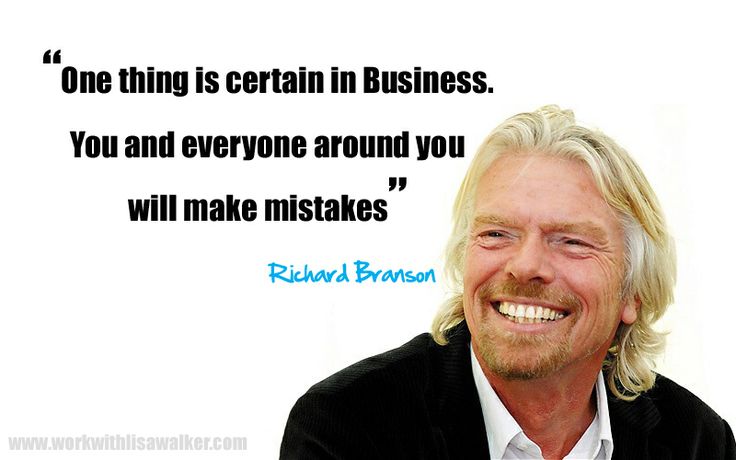
It’s not uncommon to hear people say that everyone makes mistakes. Although this seems to be common knowledge, there is still very little grace for those in positions of leadership who make mistakes on the job. Many mistakes that leaders make are simple issues that could have been handled differently if the leader was more aware ahead of time.

With that in mind, I want to talk about some of the frequent mistakes that are made by team leaders and how you can avoid making them yourself.

5 Common Mistakes That Team Leaders Make

How Mistakes Can Influence Your Leadership

In many circumstances, it’s possible to learn from making mistakes. However, experience can be a hard teacher and a very unforgiving mentor. Taking the wrong steps might be harmless on a number of occasions, but it can also be toxic to your career, your ambitions, and your personal life.

The biggest problem with learning from experience alone is that you may not find out you were making a mistake until it’s been going on for years or it’s too late to change. Maybe you will become a better leader afterwards, but you may have lost an opportunity that you otherwise would have kept if you had avoided that mistake entirely.

Common Mistakes for Team Leaders

My point with this article is to help you avoid some of the most common leadership mistakes by making you aware of them and helping you sidestep the issues as they come. These are the 5 most common mistakes that team leaders make:

1. Making Uninformed Decisions or Emotional Decisions

Decision-making is a logical process in a business environment. Whereas you might base a personal decision off of your emotions or incomplete information, a business decision needs more thought and more energy put into it. When you get information about anything that will influence a decision, it’s best to look for more information on the topic before you actually finalize a decision.

For example, if you are deciding which company trucks to buy you need to consult the drivers, clients, company records, and other sources of information instead of simply talking with the salesperson and finding an option that sounds good from your point of view. Different viewpoints and extra knowledge can help you to make better choices for the good of the company.

Equally as important is to avoid making decisions at work based on your emotions. No one should be hired or fired based on emotions, and no company decisions should be made because of your feelings on the issue. It’s important to make the distinction between values and emotions because while values might make you feel a certain emotion about a situation they will not cause the same rash decision-making as emotions. Think logically and be able to show your team the rationale and reasons behind your choice.


Leaders Making mistakes quote

image source: www.workwithlisawalker.com

2. Completing Unfinished Projects for Yourself


If you’ve delegated a task to your team and they send it back to you unfinished, poorly done, or not quite correct then you need to resist the urge to fix it up on your own. This is okay to do in certain circumstances, such as when a deadline is looming close and there’s no time to spare or if you have given instructions to you want to edit the project before it’s submitted fully.

However, you should not accept work that’s not done correctly or is not finished entirely, unless there has been some communication about it beforehand and you came to and understanding with the employees. When you delegate tasks, you should expect them to be completely properly. If you spend all your time going back over work that your team has done or finished up unfinished projects, you won’t have enough spare time left for your own work.

Part of being a leader is delegating tasks and expecting that work to be done with excellence. Otherwise, you aren’t really leading your team at all.

3. Shying Away from Healthy Conflict

Conflict is a natural part of healthy human interactions. You cannot expect your team to operate at its best if they are not allowed to have conflicts of any kind. The trick is to keep things from getting out of hand and this can be done by creating a culture where healthy conflict is accepted. Allowing healthy conflicts to take place so that employees can express their different viewpoints, opinions and discuss the merits of their ideas over others’ ideas. 

4. Acting without Help Consistently

It’s unhealthy for you to run to a mentor or superior for every decision that must be made, but it’s also a bad choice to act alone on everything. When you need help, seek it out. This helps to set the standard for your employees as well, letting them know that it’s okay to ask for help when necessary in the workplace. No one is perfect!

5. Allowing Too Much Team Autonomy

Autonomous teams are those that can operate on their own without too much supervision. Empowerment is a wonderful thing in most workplaces, but it’s also not something you should expect from every employee unless they have proven themselves. Unfortunately, not everyone on your team is going to be a self-motivated, dedicated worker that will get everything done on time without supervision.

Because of this, it’s a mistake not to check up on progress, get consistent reports, and make sure everything is running smoothly. Don’t expect employees to come to you every time they have problems or to check in and let you know how their work is coming along. Instead, do the legwork and go find out for yourself how your employees are doing.

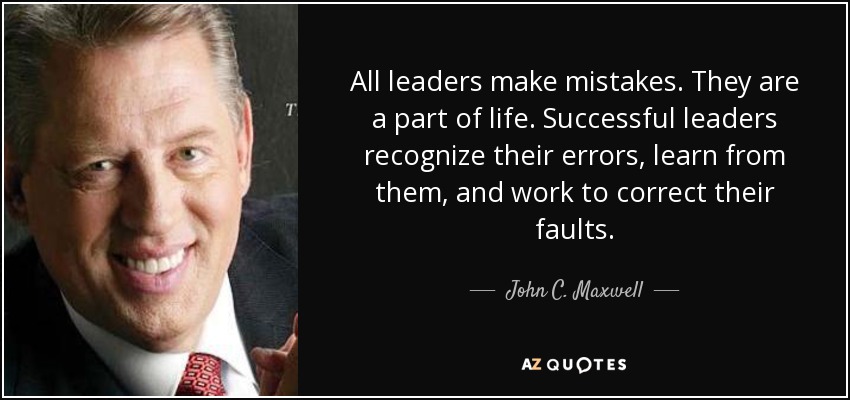
All leaders make mistakes. They are a part of life. Successful leaders recognize their errors, learn from them, and work to correct their faults. - John C. Maxwell

Recovering from Making a Mistake

Mistakes don’t have to be fatal to your career. If you acknowledge that you made a mistake, take responsibility for it, and learn how to avoid that mistake again in the future then you will be able to recover well and will usually regain employee trust also. On the other hand, acting like it wasn’t a big deal, failing to acknowledge the mistake, or passing on the blame will ruin your standing with employees and will not help you progress past your mistake. Learn how to handle it well when you do mess up.

Conclusion

It’s common to make mistakes, but that doesn’t mean you shouldn’t learn about mistakes that are frequently made and try to avoid them for yourself. After all, if you can side-step a puddle in the road, isn’t that better than simply walking through it? Learn from this list of mistakes and pay attention so that you can correct yourself before you make any of these common mistakes.


Team Building helps build better leaders!

Total Team Building specialise in teams…we facilitate a range of team building activities that help build team morale, trust, leadership & communication within a team. For more information about how Total Team Building can help you contact us today.

Leadership is not a one size fits all concept that you can slip over every situation. It looks different in many different situations. While there are many principles that apply to leaders in all areas, they must be adapted to fit the specifics of every situation. One principle that is somewhat controversial in some circles is the idea that great leaders train up their replacements – even when they’re not planning on leaving the job.

Why Leaders Need To Train Others to Take Their Place

Developing Others in Leadership

Few people are born into the world of being great leaders, but the majority of people can learn the skills it takes to lead well. However, they will need someone to help them develop those skills. This is where senior leadership staff, fit in. If you have any leadership experience at all, then you have valuable knowledge that can be passed on to the next generation of leaders in your workplace.

Developing leaders means that you’re training those under you to rise into leadership positions. In many cases, you’re training them to do the job you’re currently doing.

A Leader Shows The Way Quote

The Redundancy Argument

A popular argument is usually raised whenever there’s a discussion of training your employees to do your job. The argument is that if you teach someone to do your job, they will be able to replace you and will make you a redundant employee. If there’s another employee capable of doing your job, who won’t ask for as high of a salary, then you may just end up losing your job to the very person you trained.

It’s easy to see where this fear comes from, but it’s actually not founded in proper thinking about leadership. Training up your staff and developing their leadership capabilities does not mean they will replace you, but it does make you infinitely more valuable to your organization and it opens up opportunities for you to move up.

A New Perspective on Leadership Development

Having more employees that are focused on solving problems and accomplishing goals is excellent for any organization. It’s even better if those employees are given the tools they need and are motivated to lead the company to the right solutions. If you as a leader have to dictate everything your staff members should do, then you’re not doing a good job and you are creating a stressful job for yourself.

If you want to be irreplaceable to a company, train your employees to replace you. This will give your company many more qualified, skilled leader’s to drive company progress forward. It will also bring up productivity in the workplace, especially when teams are involved because each person is going to feel more responsible for their own work and will be more willing to contribute positively.

Develop your team by allowing them to think outside of the box and come up with solutions to problems on their own. When you act like a dictator and demand to be in control of every decision that’s made, without accepting input or seeing what your team has to say, then you are creating a stagnant work environment that will not make you look good for promotion or accomplish company goals.

Conclusion

When leaders train their staff to be their replacement by developing leadership skills in the team, they manage to create an exciting, desirable, and productive workplace. You will also make your importance more obvious to the company, even though there are now others who can do your job as well. It’s vital that you take hold of the idea of developing your team to be able to replace you because this is the only way to make a truly successful workplace and a clear forward path upwards for yourself.


Build better leaders Today!

Total Team Building specialise in teams…we facilitate a range of team building activities that help build team morale, trust, leadership & communication within a team. For more information about how Total Team Building can help you contact us today.